
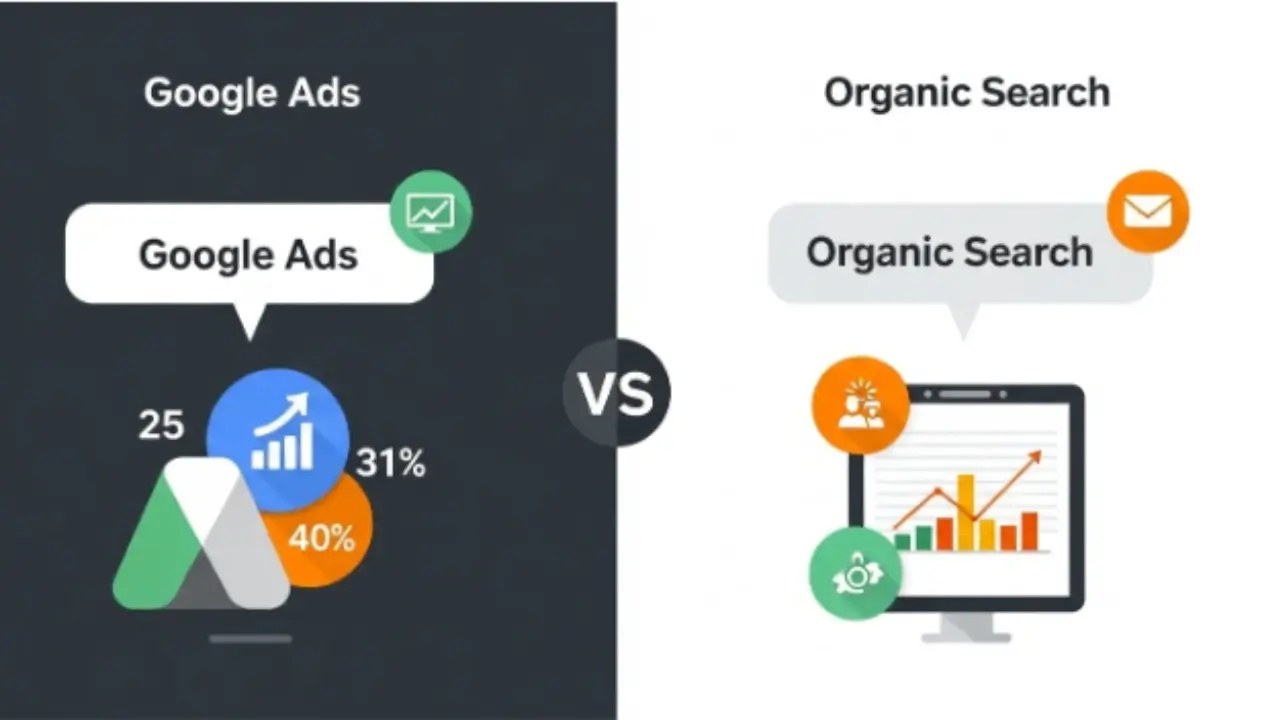
Every startup in Dubai wants fast growth, but budgets are often tight at the beginning. The real challenge is deciding where to invest first to get the best results. Choosing the right marketing channel early can save money and bring better leads.
Paid ads show your business instantly to people searching online, while organic search helps your website grow slowly through content and trust. Ads work fast but need constant spending.
Organic search takes time but keeps bringing traffic without paying for every click. Knowing these differences helps startups make smarter decisions.
Understanding Google Ads vs. Organic Search for Startups in Dubai
When comparing Google Ads vs. organic search, it is important to know how each channel works.
- Google Ads is a paid method where your website appears at the top of search results when someone clicks your ad.
- Organic search relies on search engine optimization, also known as SEO, to earn rankings naturally over time.
For startups, this choice is not only about cost but also about patience. Ads work fast but stop when money runs out. Organic search takes time, but keeps giving value even after months or years.
Both options can support growth when used correctly.
What Are Google Ads and How Do They Work?
Google Ads is a paid advertising platform where businesses bid on keywords. When someone searches for those words, the ad can appear at the top of the page.
You only pay when a user clicks on the ad, which is why it is called pay-per-click advertising.
This method is useful for startups that need quick traffic or want to test a new product. Ads allow full control over budget, audience, and timing.
However, costs can rise fast in competitive markets. Once the budget ends, traffic also stops, which makes long-term planning harder.
What Is Organic Search and Why Does It Matter?
Organic search means getting website visits without paying for each click. This happens by creating helpful content, improving website structure, and building trust with search engines.
Over time, your pages can rank higher for useful search terms.
For startups, organic search builds a strong online presence and brand trust. It may take months to see results, but the traffic is steady and often more trusted by users.
Many startups work with an SEO expert in Dubai to plan content, fix technical issues, and improve visibility in search results in Dubai and other nearby regions.
Detailed Comparison: Google Ads vs. Organic Search
| Aspect | Google Ads | Organic Search |
| Traffic source | Paid placements at the top of search results | Free listings earned through content and SEO |
| Cost structure | You pay for every click | No payment for clicks |
| Setup time | Very quickly, campaigns can go live in hours | Takes weeks or months to build |
| Speed of results | Immediate traffic | Gradual traffic growth |
| Long-term value | Ends when the budget stops | Continues even without spending |
| User trust | Many users skip ads | Higher trust from search users |
| Click-through rate | Can be high with strong copy | Often higher due to trust |
| Competition impact | Costs rise with competition | Rankings depend on quality, not bids |
| Budget control | Full control over daily spend | No direct budget control |
| Learning curve | Easy to start, hard to optimize | Slower learning, more stable |
| Best for | Launches, offers, testing ideas | Brand growth, authority, trust |
| Sustainability | Short-term | Long-term |
Cost, Time, and Return on Investment
Cost and time are key factors for startups. Google Ads needs a daily or monthly budget. Results are quick, but costs increase as competition grows.
Organic search costs more time and effort upfront, such as content creation and website fixes.
In terms of return, ads can bring leads fast, which is helpful for short-term goals. Organic search often gives better value in the long run because traffic continues without paying for each visit.
Startups should think about how long they can wait and how steady they want their results to be.
When Should Startups Choose Google Ads in Dubai?
Google Ads works best when startups need fast results. It is useful during product launches, seasonal offers, or when testing new ideas. Ads also help when organic rankings are still low, and traffic is needed quickly.
Startups with clear landing pages and strong offers often see better results from ads. However, it is important to track performance closely.
Without proper monitoring, costs can rise without strong returns. Ads should be treated as a short-term boost rather than a permanent solution.
When Should Startups Focus on Organic Search?
Organic search is ideal for startups planning long-term growth. It helps build authority, trust, and steady traffic. This method works well for blogs, service pages, and educational content that answers real user questions.
Startups that invest early in content and SEO often see lower marketing costs later. Organic traffic also supports other channels like email marketing and social media.
While results take time, they are more stable and less dependent on daily spending.
Using Both Channels Together
Many successful startups do not choose only one option. They use Google Ads for quick wins and organic search for long-term success. Ads can bring traffic while SEO work builds strong foundations in the background.
Using both together allows startups to test keywords with ads and then create content around those topics. This balanced approach reduces risk and improves learning. Over time, startups can reduce ad spending as organic traffic grows stronger.
Final Thoughts: Making the Right Choice
When deciding between Google Ads and organic search, there is no single correct answer.
Google Ads offers speed and control, while organic search offers trust and long-term value. Startups should look at their goals, budget, and patience level before choosing.
A smart strategy often includes both methods at different stages of growth. By understanding how each channel works, startups can spend money wisely and build a strong online presence that lasts. Visit our website for more guides.
