
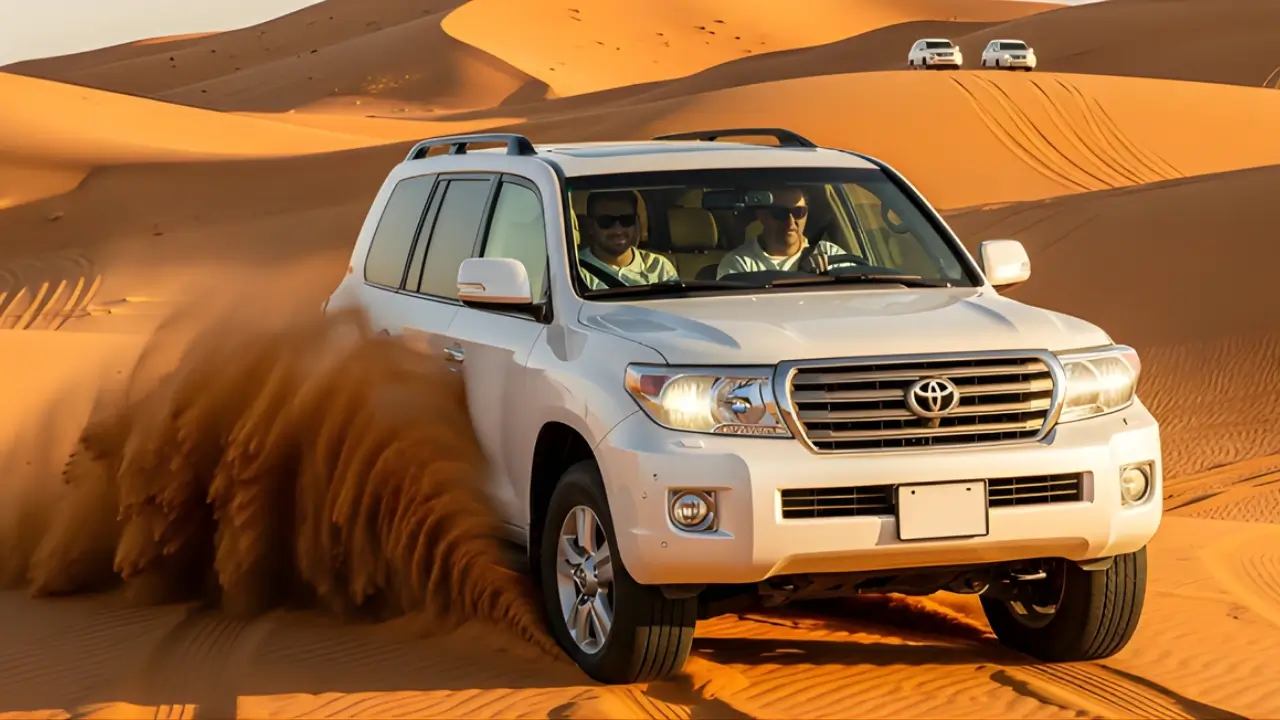
The desert calls, and you’ve booked that dune bashing tour you’ve been eyeing for months. Your 4×4 looks ready, but here’s what most drivers don’t realize: sandy dunes outside Dubai put more stress on your vehicle in two hours than a month of city driving.
Getting stuck in soft sand with a dead battery or overheated engine isn’t just inconvenient. It’s dangerous when temperatures hit 50°C, and you’re miles from help.
A systematic pre-drive check takes 30 minutes and prevents expensive rescue calls.
- Why Desert Driving Destroys Unprepared Vehicles
- Battery Health: Your Critical Power Source
- Tire Pressure: Make or Break
- Cooling System: Fighting Extreme Heat
- Engine Oil: Protection Under Pressure
- Air Filter: Block the Sand
- Recovery Gear: When Stuck Happens
- Fuel Planning: Calculate Conservative Range
- Final 15-Minute Check
- When to Postpone Your Trip
- Preparation Equals Safety
Why Desert Driving Destroys Unprepared Vehicles
Dubai’s desert terrain looks beautiful, but punishes cars mercilessly. Your engine works harder climbing soft sand than steep highways.
Constant throttle changes and extended low-gear operation generate intense heat throughout your drivetrain.
Fine sand penetrates air filters, cooling systems, and engine compartments. A single desert trip can clog your air filter enough to strain your engine.
Heat radiating from sand adds 10-15°C to your vehicle’s operating temperature. When ambient air already reaches 45°C, your cooling system operates at absolute limits.
Battery Health: Your Critical Power Source
Your battery faces brutal conditions in desert driving. Extreme heat plus power demands from winching or extended idling with AC can drain even healthy batteries fast.
Desert heat accelerates battery fluid evaporation and cuts battery life by 50% compared to moderate climates. A battery lasting five years in Europe fails in three years here.
Check these indicators before heading out:
- Voltage should read 12.6V or higher with the engine off
- No visible corrosion on terminals
- No cracks, bulging, or swelling on the battery case
- Age under 3 years (UAE climate standard)
Start your engine and watch how it turns over. Sluggish starting or dimming lights signal weakness. Desert conditions expose battery problems immediately during recovery attempts.
If your battery approaches 3 years old or shows warning signs, replace it before your trip. A reliable car battery replacement service in Dubai can test actual capacity and install a fresh battery before breakdown, not during one.
Tire Pressure: Make or Break
Tire pressure determines whether you glide over sand or get hopelessly stuck. You must deflate before entering sand, then reinflate before returning to pavement.
Pressure for different terrains:
- Highway driving: 32-35 PSI
- Hard-packed desert: 28-30 PSI
- Soft sand dunes: 15-18 PSI
- Very soft sand: 12-15 PSI
Never attempt sand driving with highway pressure. You’ll sink immediately and dig deeper with every throttle application.
Carry a reliable air compressor. Budget models overheat after two tires. Quality portable compressors cost AED 300-800 but work when you need them.
Check tire condition before deflating. Desert rocks shred tires with damaged sidewalls or worn tread. Minimum tread depth should be 4mm across all tires.
Bring a pressure gauge you trust. Digital gauges (AED 50-150) provide accurate readings in bright sun.
Cooling System: Fighting Extreme Heat
Your cooling system works overtime in desert conditions. Climbing dunes in low gear while idling with the AC creates perfect conditions for overheating.
Coolant level must reach the maximum line. Low coolant means reduced capacity exactly when you need it most. Check when the engine is completely cold.
Coolant should be bright green, orange, or pink. Brown or murky coolant indicates contamination and reduced effectiveness.
Inspect these components:
- Radiator fins for sand buildup or damage
- All hoses for cracks or leaks
- Radiator cap seal condition
- Fan operation and blade condition
Sand blocks airflow between radiator fins. Use low-pressure water to clean debris from the radiator front.
Carry extra coolant in your vehicle. A 4-liter bottle costs AED 40-60. Mix with distilled water at a 50/50 ratio, never tap water.
Engine Oil: Protection Under Pressure
High-load driving in extreme heat tests engine oil beyond normal limits. Constant acceleration and high RPMs in low gears break down oil faster than highway driving.
Check oil level with engine cold on level ground. Oil should read at or near maximum. Operating even slightly low risks of serious engine damage in desert conditions.
Fresh oil appears amber and flows smoothly. Dark brown or black oil that feels gritty needs changing before desert driving.
Oil change intervals for desert driving:
- Synthetic oil: every 7,000-8,000 km
- Conventional oil: every 5,000 km
- After extended desert trips: inspect at 1,000 km intervals
Check transmission fluid when the engine is warm and running. Fluid should be bright red and smell sweet. Dark fluid or a burnt smell means overdue service.
Air Filter: Block the Sand
Desert sand loads your air filter faster than anything else. A single session can restrict airflow enough to reduce power and increase fuel consumption.
Remove your air filter and hold it to a bright light. You should see light through the material. Blocked filters restrict air and strain your engine.
Don’t blow compressed air through filters from the inside out. This drives particles deeper. Replace heavily loaded filters rather than cleaning them.
Replacement signs:
- Reduced throttle response
- Decreased fuel economy
- Engine hesitation during acceleration
- Visible sand accumulation
Carry a spare air filter. They cost AED 50-150 and take five minutes to swap. A clogged filter forces your engine to work harder when already stressed.
Recovery Gear: When Stuck Happens
Getting stuck happens to experienced drivers. Being prepared makes the difference between a minor inconvenience and a major emergency.
Essential equipment:
- Heavy-duty tow strap rated for your vehicle’s weight
- Two metal sand ladders or recovery boards
- Full-size shovel
- Work gloves for handling hot metal
- Tire deflation tool
Sand ladders (AED 200-400 per pair) provide traction when you’re dug in. Metal or reinforced composite designs won’t fail under load.
Keep 10 liters of drinking water separate from coolant supplies. Factor two liters per person for four-hour trips.
Bring a fully charged phone plus a portable battery pack. Cell coverage exists in popular areas, but battery drains faster in heat.
Pack basic tools, including socket wrench, screwdrivers, and pliers. Simple fixes like tightening a loose battery terminal can save your trip.
Fuel Planning: Calculate Conservative Range
Desert driving consumes significantly more fuel than highway cruising. Constant throttle modulation and low-gear operation can cut the normal range by 30-40%.
Fill your tank completely before leaving paved roads. “Enough to get there and back” doesn’t account for getting stuck or helping others.
Fuel consumption in desert terrain:
- Soft sand: 15-20 liters per 100 km
- Hard-packed desert: 12-15 liters per 100 km
If your normal highway range is 600 km, plan for 350-400 km of desert capability. Keep a minimum of 25% fuel reserve for emergencies.
Know where fuel stations exist before your entry point. Some remote areas have no services within 50 km.
Final 15-Minute Car Checks
At your staging area before entering sand, verify: all lights work, no fluid leaks underneath, tire condition shows no cuts, and all doors and hood close securely.
Test 4WD engagement before you need it. Shift into 4WD low range, drive forward and reverse, and verify indicators show properly.
Secure loose items or remove them. Emergency stops and steep angles throw unsecured objects around the cabin.
When to Postpone Your Trip
Sometimes the best decision is to delay. Extreme heat warnings above 48°C mean your cooling system operates beyond design limits. One minor issue becomes a major emergency.
If any system shows warning signs during pre-checks, delay your trip. A questionable battery or marginal tire condition will fail in desert conditions.
Solo desert driving carries serious risks. Always drive with at least one other vehicle.
Check weather forecasts for your area. Sandstorms reduce visibility to zero. Wind above 40 km/h creates severe sand movement that hides tracks and landmarks.
Preparation for Car Checks Equals Safety
The difference between an epic adventure and an emergency rescue comes down to systematic vehicle preparation. Your vehicle works harder in two hours of dune driving than in a week of highway commuting.
Every system faces maximum stress simultaneously. Components that might last another month in normal driving fail immediately under desert conditions.
Check everything methodically. Carry proper recovery equipment and emergency supplies. Know your vehicle’s limits and your skill level.
The desert only responds to preparation, respect, and proper equipment. Provide all three, and you’ll create memories instead of emergency service bills.
Conclusion
This is all over from my guide. I hope you like this preparation guide about desert safari car checks uae. Simply follow my tips to save on a desert safari ride. Visit our website for more guides.
